'/%3e%3cpath%20id='Vector_2'%20fill-rule='evenodd'%20clip-rule='evenodd'%20d='M41.7365%206.2391C40.7304%206.2391%2039.915%207.05458%2039.915%208.06058C39.915%209.06663%2040.7304%209.88206%2041.7365%209.88206C42.7423%209.88206%2043.558%209.06663%2043.558%208.06058C43.558%207.05458%2042.7423%206.2391%2041.7365%206.2391Z'%20fill='var(--fill-0,%20white)'/%3e%3cpath%20id='Vector_3'%20fill-rule='evenodd'%20clip-rule='evenodd'%20d='M11.2236%206.56889C11.2236%206.74741%2011.076%206.89236%2010.8943%206.89236H2.52113V2.50723H10.8943C11.076%202.50723%2011.2236%202.65189%2011.2236%202.8307V6.56889ZM9.43021%200.0836868H0V13.999H2.52113V9.31585H9.42997C11.7867%209.31585%2013.6975%207.43888%2013.6985%205.12302L13.699%204.27991C13.7%201.96262%2011.7886%200.0836868%209.43021%200.0836868Z'%20fill='var(--fill-0,%20white)'/%3e%3cpath%20id='Vector_4'%20fill-rule='evenodd'%20clip-rule='evenodd'%20d='M63.789%2011.3469C63.789%2011.5257%2063.644%2011.6704%2063.4652%2011.6704H55.7529C55.5744%2011.6704%2055.4294%2011.5257%2055.4294%2011.3469V0.0836868H53.0144V9.80446C53.0144%2012.1211%2054.8923%2013.999%2057.2088%2013.999H62.0102C64.3268%2013.999%2066.2048%2012.1211%2066.2048%209.80446V0.0836868H63.789V11.3469Z'%20fill='var(--fill-0,%20white)'/%3e%3cpath%20id='Vector_5'%20fill-rule='evenodd'%20clip-rule='evenodd'%20d='M19.8448%2011.2329V0.0655822H17.324V10.3478C17.324%2012.3539%2018.9897%2013.9799%2021.0438%2013.9799H29.5237L30.3019%2011.5564H20.176C19.9931%2011.5564%2019.8448%2011.4117%2019.8448%2011.2329Z'%20fill='var(--fill-0,%20white)'/%3e%3cpath%20id='Vector_6'%20fill-rule='evenodd'%20clip-rule='evenodd'%20d='M81.0406%2011.253C81.0406%2011.4316%2080.8957%2011.5765%2080.7171%2011.5765L72.727%2011.5748V2.50822H80.7171C80.8957%202.50822%2081.0406%202.65288%2081.0406%202.83169V11.253ZM79.279%200.0846748H70.2495V14H79.2776C81.5936%2014%2083.4716%2012.1227%2083.4721%209.80665L83.4735%204.28044C83.4742%201.96337%2081.5961%200.0846748%2079.279%200.0846748Z'%20fill='var(--fill-0,%20white)'/%3e%3c/g%3e%3c/svg%3e)
Delivering field insights for home-service companies
42
actionable coaching moments
7
handoff risks prevented
Interview with

Joel Doherty
Co-founder of Aptly Able
About Aptly Able
Aptly Able builds revenue recovery software for home-service companies: businesses in HVAC, plumbing, electrical, roofing, restoration, and similar trades where most of the customer relationship happens in the field. Their suite covers the full lead journey, from VoiceDrop (reactivating existing customer databases) to CallSense (analyzing phone conversations for missed opportunities and coaching) to FieldSense, their newest product, which brings the same intelligence into in-home appointments and field visits.
The Problem
Most home-service companies think growth means buying more leads. Joel Doherty, co-founder of Aptly Able, has spent 30 years watching that assumption cost businesses real money. The leads aren't always the problem. The problem is what happens after the truck pulls into the driveway.
For HVAC companies, plumbers, roofers, and electricians, the most important sales conversation happens in a customer's living room. That's where objections surface, where trust is built or lost, where the deal gets made or doesn't. And for most businesses, that conversation disappears the moment the technician walks back out the door. Managers get a CRM note, maybe a short summary, often nothing - they coach from memory and follow up on guesswork.
“Most of that information disappears as soon as the appointment ends,” says Joel. “Managers are left trying to coach, follow up, and improve conversion rates based on memory, incomplete notes, or secondhand interpretation.”
This creates a specific failure pattern. Follow-up is inconsistent because no one has a clear record of what was promised. Coaching is imprecise because managers are not working from real conversations. And revenue leaks out of appointments that could have closed if someone had caught the right signal in time.
Aptly Able had already solved this problem for two parts of the customer journey. CallSense gave managers visibility into phone conversations. VoiceDrop helped reactivate existing customer databases. But once the rep walked into a customer's home, the data stopped. That’s where their new product FieldSense comes in.
The Search
Recording with phones
The obvious fix was to have reps record on their phones. In practice, that falls apart quickly. Phones get pocketed, interrupted by notifications, or used for other tasks mid-appointment. Audio quality is inconsistent. And asking a technician or comfort advisor to manage a recording app while running a sales conversation in someone's living room creates friction that most reps simply won't tolerate.
Sourcing their own hardware
Aptly Able also looked at building more of the hardware layer themselves. They ruled it out. “We are not trying to become a hardware company,” he explained. Their value is in the AI workflow, the reporting, and the business outcomes. Building device reliability from scratch would have pulled focus away from the core problem.
Transcription services alone were not enough either. Clean transcription requires clean audio, which requires reliable capture. Without solving the hardware problem first, the AI layer had nothing to work with.
Why Plaud
For field teams, adoption is the real product. A device that is too complicated, too intrusive, or too unreliable will not be used consistently, and inconsistent use means incomplete data.
Plaud's hardware is simple and purpose-built for recording conversations. That matters in the context of a home-service appointment, where the rep is focused on the customer, not on managing technology.
“Adoption is everything,” the Aptly Able team says. “If the device is too complicated, too intrusive, or too unreliable, reps and technicians will not use it consistently.”
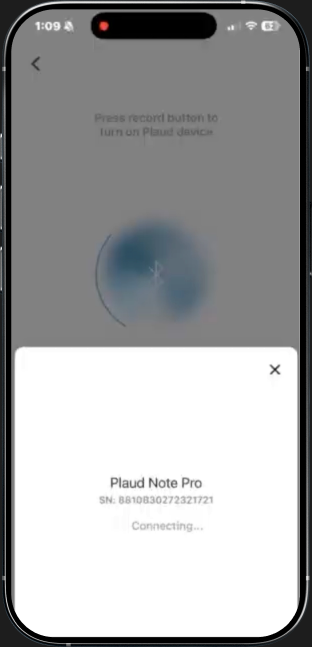
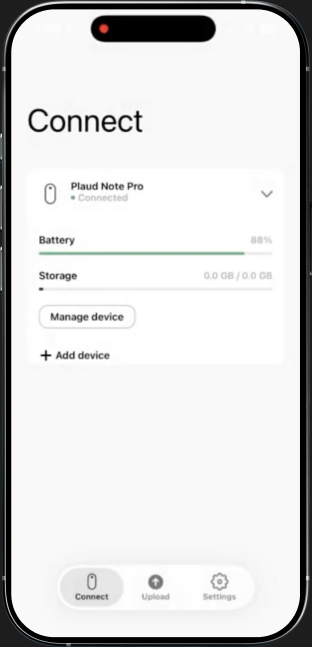
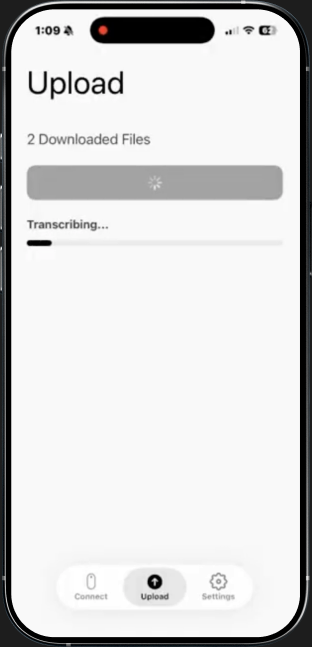
The integration path was equally important. Plaud's device SDK and transcription API let Aptly Able connect device-driven conversation capture directly into the FieldSense application, keeping the workflow cohesive rather than forcing users into a disconnected recording tool.
“We needed more than a recorder. We needed a partner that could help us make field conversation capture practical, scalable, and useful inside a broader AI-powered service.”
The Outcome
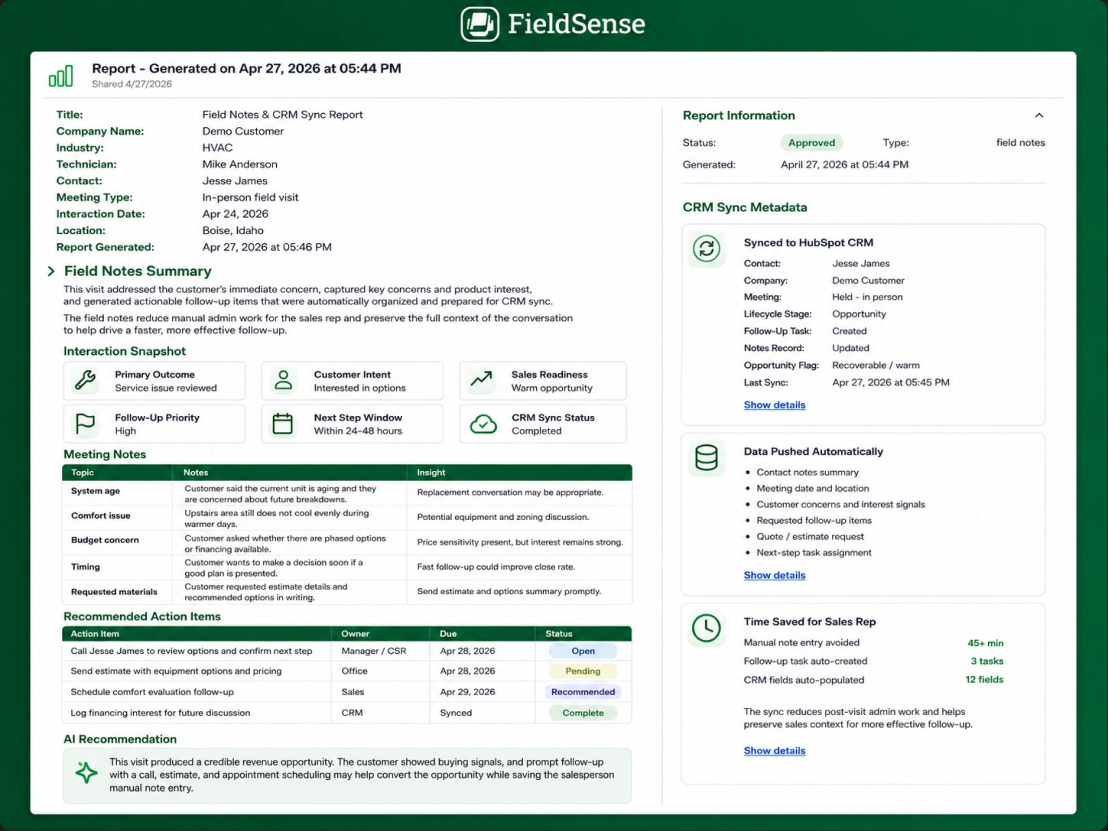
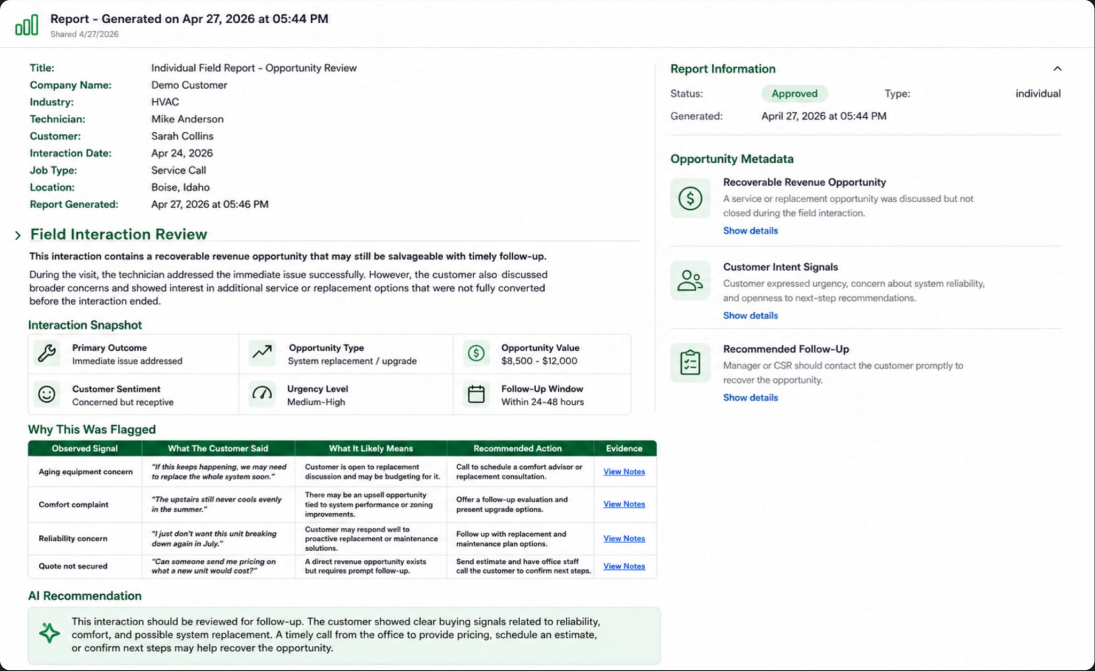
FieldSense takes the conversation captured by the Plaud device and structures it into usable outputs: summaries, action items, customer concerns, objections, commitments, and follow-up needs. For the first time, that information flows into the same system managers are already using to track leads and coach performance.
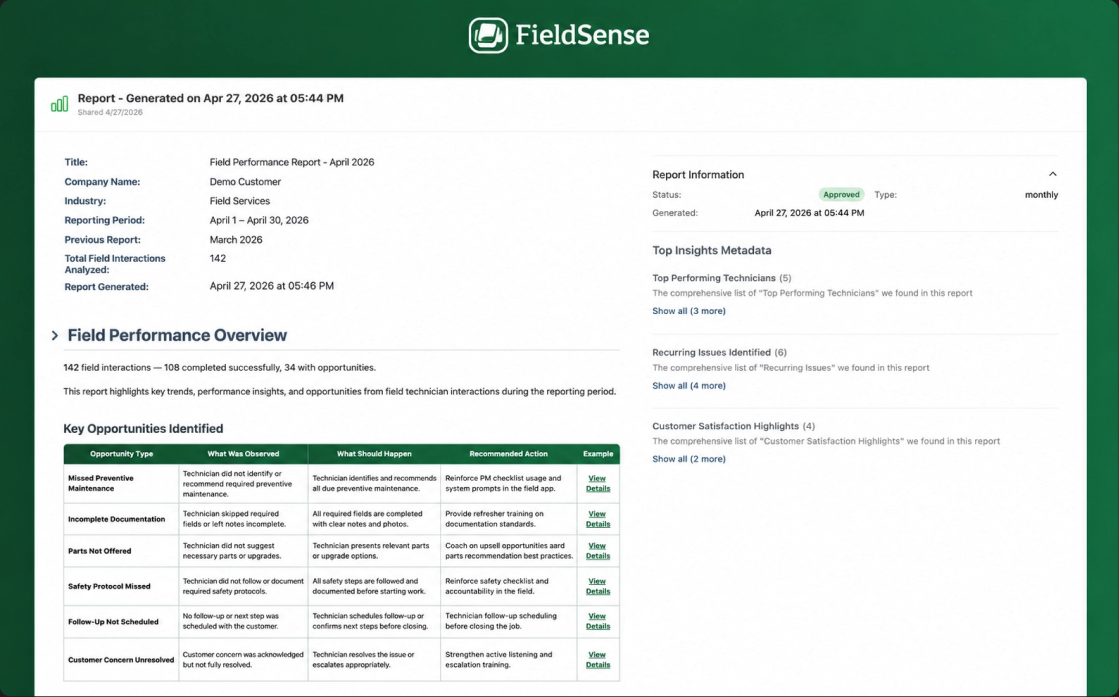
The results are concrete. In a single reporting period, FieldSense surfaced 42 coaching moments, 18 missed recommendations, and 7 handoff risks - signals that would have disappeared the moment the technician walked back to the van. Managers can now see what actually happened during a visit, coach from real conversations instead of memory, and act on opportunities before they go cold.
The practical effects are straightforward. Reps spend less time writing notes after a full day of appointments. Managers can see what actually happened during a visit instead of relying on the rep's recollection. Follow-up improves because the system surfaces what was promised and what still needs to happen. And coaching gets more precise because it is grounded in real conversations rather than general impressions.
FieldSense also completes something structurally important for Aptly Able. VoiceDrop covers database outreach. CallSense covers the phone. And now, FieldSense covers the in-home appointment.
Together, the three products give home-service companies a connected view of the full lead journey: from the first touchpoint to the close.
What's Next
The near-term priority is making capture seamless for field teams. A rep should be able to record an appointment, return to the van, and find useful outputs waiting in the app, with no administrative overhead.
The roadmap ahead is ambitious. Aptly Able is actively pursuing integration with ServiceTitan, bringing FieldSense directly into the field management platform that thousands of home-service companies already run their business on. An enterprise rollout with a national HVAC manufacturer is underway, extending FieldSense’s reporting and coaching intelligence across large dealer networks for the first time.
Longer term, the vision expands beyond HVAC into plumbing, roofing, electrical, and restoration - any trade where the most important conversation happens in a customer’s home. Real-time in-field coaching, where AI surfaces prompts and signals to the rep during the appointment itself, is on the horizon. So is automated follow-up triggering directly from FieldSense into CRM, removing the manual step between a flagged opportunity and the action taken on it.
For multi-location dealers and franchise operations, the next phase includes rollup reporting across locations, giving ownership groups the same field intelligence visibility that individual managers have today.
The goal, as they put it, is not to replace people, but to give them better tools: “better memory, better visibility, better follow-through, and better insight from the conversations they are already having.”
Product
Aptly Able is building on Plaud Embedded, the transcription API and device SDK for developers who need real-world audio capture that works.